
You can run the perfect PPC ad, target the right audience, and write a headline that practically begs to be clicked—but if the page people land on afterward is confusing, slow, or unfocused, your campaign can still fail.
Why? Well, it’s probably because your landing page is awful.
In the world of PPC advertising, landing pages are often the difference between a campaign that fruitlessly burns through budget and one that consistently generates leads and sales. They help guide visitors toward a specific action while reinforcing the message that convinced them to click in the first place.
For small businesses especially, understanding landing pages can dramatically improve the effectiveness of paid advertising efforts without necessarily increasing ad spend.
Need to Know
- A landing page is a focused webpage designed to encourage one specific action, such as calling, booking, or purchasing
- They are especially important in PPC advertising campaigns because they continue the message of the ad
- Good landing pages can improve important metrics like conversion rate, cost per conversion, bounce rate, and quality score (for platforms like Google Ads)
- The most effective ones are usually simple, clear, mobile-friendly, and built around a strong call-to-action
What is a Landing Page?
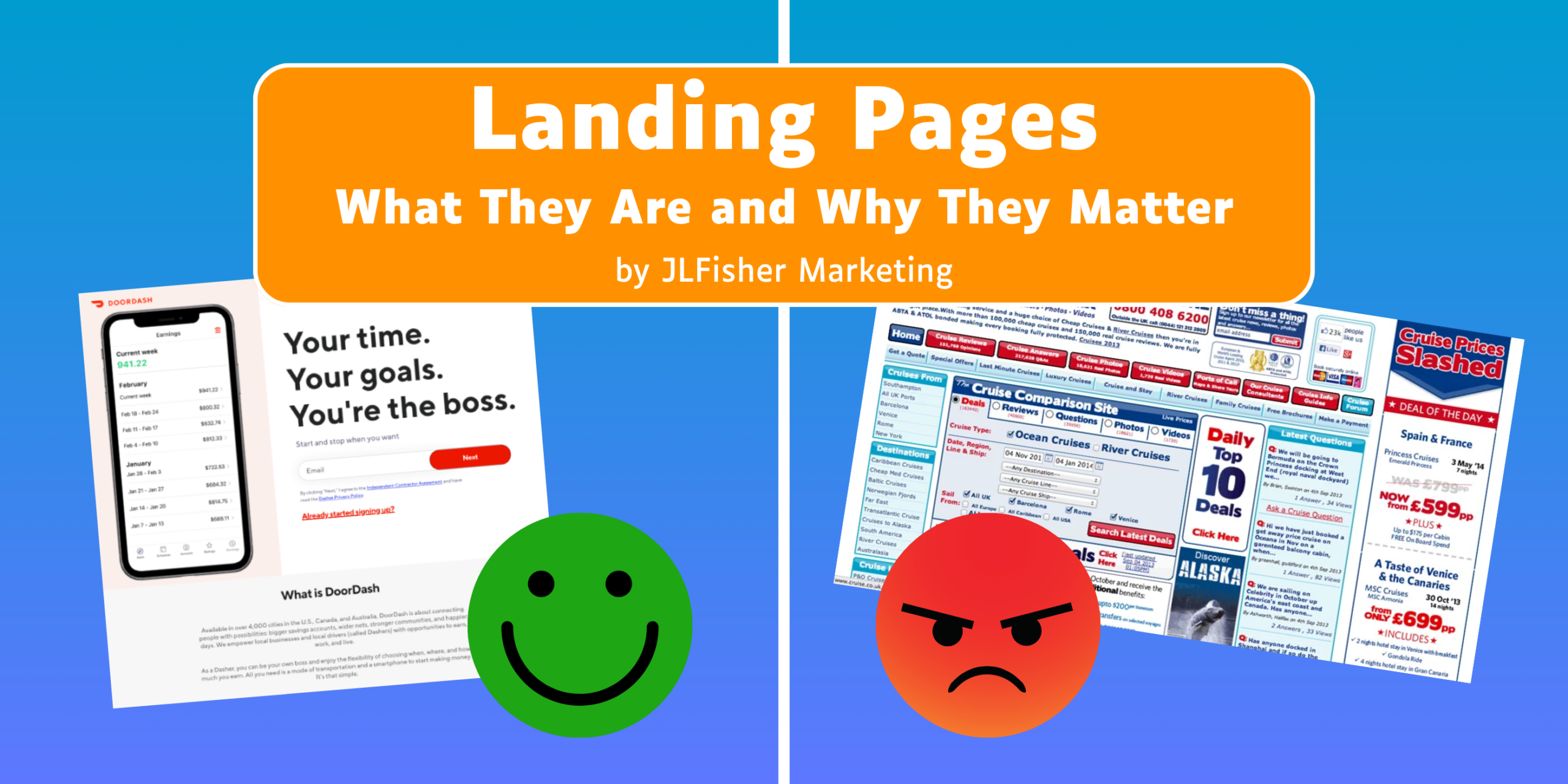
A landing page is a standalone webpage designed with a single goal in mind: convert the visitor. Unlike a homepage, which may contain dozens of links and multiple competing messages, a landing page is intentionally focused.
In PPC advertising, users “land” on this page after clicking an ad.
For example, imagine someone searches for “emergency plumber near me.” They click an ad promising “24/7 Emergency Plumbing Services.” If they arrive on a page specifically about emergency plumbing with a visible phone number and fast contact form, they’re much more likely to convert.
If that same person instead landed on a generic homepage with scattered information, they may leave before taking action, costing the business ad spend without getting a return.
That focused experience is the purpose of a landing page: reducing distractions and concertedly guiding users toward a conversion.
How Do Landing Pages Improve Ad Campaigns?
Landing pages improve PPC campaigns because they align user intent with a clear next step.

When someone clicks an ad, they already have a problem, need, or interest in mind. A strong landing page reassures them they’re in the right place and quickly answers key questions:
- What is this?
- Can it help me?
- Why should I trust this business?
- What should I do next?
Psychologically, they work well because they reduce cognitive overload. Too many choices can cause users to hesitate or abandon the page altogether. Focused landing pages simplify decision-making.
They also improve important PPC metrics:
- Conversion Rate: The percentage of visitors who take a desired action.
- Cost per Conversion: Better pages often reduce wasted clicks, lowering acquisition costs.
- Bounce Rate: Focused, relevant pages help keep visitors engaged instead of immediately leaving.
- Quality Score: Platforms like Google Ads reward relevant landing pages, which can help improve ad placement and reduce costs.
Characteristics of a Good Landing Page
Creating a landing page doesn’t require you to reinvent the wheel. While there is room for personality and uniqueness, the best ones tend to share several tried-and-true core characteristics.

Clear Messaging
Visitors should immediately understand:
- What is being offered
- Who it’s for
- What action they should take
The headline should closely match the ad that brought them there. People who click on an ad for HVAC repairs should be brought to a site that focuses on HVAC repairs, not a page that details the history of ducting, as interesting as you may find it.
Strong Call-to-Action (CTA)
A landing page should make the next step obvious:
- “Book a Free Consultation”
- “Get a Quote”
- “Call Now”
Good CTAs are visible and repeated naturally throughout the page. Be careful not to take this tip to the extreme and bombard visitors with “Call Now!” buttons between every line of text. There’s a delicate balance between reasonable and annoying when it comes to CTAs, and it may take some time to find that ratio.
Mobile-Friendly Design
Many PPC clicks come from smartphones. In fact, the majority of website traffic is mobile-based nowadays. As such, pages should load quickly, look clean on mobile devices, and use easy-to-complete forms. If your site struggles to deliver in any of those areas, then you have a problem that’s bigger than landing page performance alone.
Trust Signals
Testimonials, reviews, certifications, guarantees, and real imagery can all help reassure visitors they’re making the right choice. You can typically include a section like this below-the-fold, as trust signals tend to be better at reinforcing an existing point compared to establishing a new one on their own.
Limited Distractions
Landing pages generally perform better when unnecessary navigation links and competing messages are removed. Don’t make your job any harder than it already is. Give people as clear a path as possible to the place you want them to go.
For instance, if you’re able to hide your site’s navigation on select pages, that’s not a bad idea for your landing pages. Think of it like training a dog: the fewer variables and the less noise, the better your chances are of getting them to do what you want them to do.
Need Help Building Better Landing Pages?
Creating effective landing pages takes time, strategy, and ongoing testing—especially when paired with PPC advertising campaigns.
That’s why many small businesses turn to professionals for help.
At JLFisher Marketing, we help businesses create focused PPC campaigns supported by landing pages designed to convert visitors into real customers. From granular ad targeting and keyword research to landing page optimization and conversion tracking, our team works to make your advertising budget go further and bring in a better return.
If you’re still learning the basics, keep an eye out for our upcoming PPC Fundamentals Guide, where we’ll break down paid advertising concepts in simple, practical terms.
Or, if you’d rather focus on running your business while someone else handles the technical side of PPC management, we’d be happy to help.